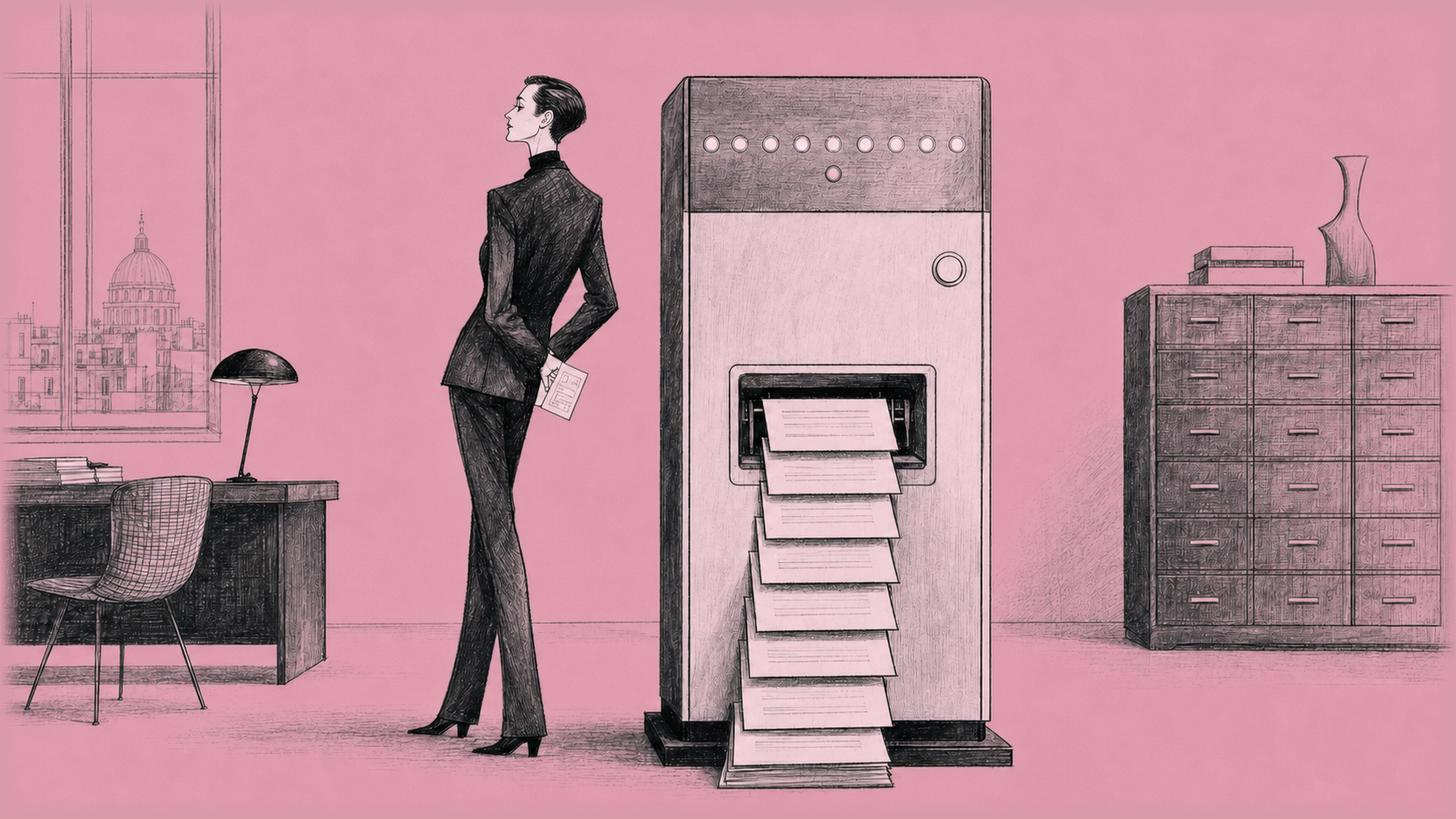
A brief is a theory of change compressed onto one page.
This is fortunate. The alternative is 47 slides and a learning agenda.
The brief says: if these people notice or feel something different, perhaps they will behave differently.
AI can supply the audience, tension, consumer truths, and immaculate formatting in minutes. It can make the document look finished before this sentence has located its verb.
Please indicate the intended change.
“Raise awareness” has been entered.
The system was expecting a change.
All boxes are now green
Martin Weigel makes the larger case in his essay, “Strategy, Rediscovered?”: strategy is not the same as an insight, a brief, or an attractive warm-up for the people who make the work. It aims to cause a change in the real world. Analysis matters, but imagination begins after the facts have stopped arranging themselves helpfully.
That distinction matters more now. A model can turn a research deck into a respectable brief in seconds. Familiar shapes are completed beautifully. The audience has been segmented. The tension has been tensioned. A tasteful verb has been placed near the brand.
A 2025 Google Research paper, using simplified tests of open-ended tasks, found limits in next-token systems where a more far-sighted creative leap was needed. The result does not judge every model or campaign. It does warn against asking a prediction machine to choose the future by itself.
Completion is easy to detect. Choice is less considerate.
The brief should therefore behave like a wager: a chosen explanation of how an idea might alter what people notice, feel, or do.
BUREAU SYSTEM NOTE 15: All fields are complete. The purpose field contains the word “engagement.” No evacuation is necessary.
Insert one moving part
Start with a single plain sentence:
If we make [this group] see or feel [this different thing], they may [do this different thing], because [this is the human logic].
This is a claim about cause and effect. It can be wrong.
Good. The brief has begun to display signs of life.
Now add three labels:
- The change. Name the shift in memory, feeling, or behaviour. “Raise awareness” remains a light switch with no room attached.
- The imaginative bet. Name the frame, story, or experience that could cause the shift. “Be disruptive” will be returned unopened.
- The proof. Decide what would make you keep, change, or stop the idea. Do this before the applause begins contaminating the sample.
This procedure does not mechanize creativity. It gives imagination something solid to disobey.
Adjectives will not be scored
The present evidence suggests the blockage is rarely a shortage of ideas. The BetterIdeas Project reported in 2025 that only 10% of respondents said ideas were always evaluated against clearly defined criteria. A brief may be beautifully written, then abandoned when the room begins grading work by volume, familiarity, or who owns the largest water bottle.
Use the same labels to evaluate every idea. Does it make the intended change plausible? Does it express the imaginative bet? What evidence would show that it works?
The machine can generate “ten fresh routes.” It will place them in a row. They will be fresh in the way ten identical towels are fresh.
Ask instead for routes that pursue one defined change through genuinely different mechanisms: a new ritual, a useful contrast, an unexpected public act, a different emotional promise. Then judge each route against the wager. The least alarming option receives no automatic points.
Recent effectiveness research from Les Binet and Will Davis makes the commercial version of this point. Their 2026 IPA report argues that narrow measures and short-term efficiency can lead advertising to think too small, while broad reach and memorable creative work build longer-term effects. The implication is not that every brief requires a giant balloon or a tram wrapped in velvet. It is that the metric must not quietly choose the ambition.
AI may prepare the cupboard. It can collect facts, expose assumptions, and generate alternatives with excellent posture.
The strategist decides what the cupboard is for.
A brief that merely requests output will receive output. A brief that names a change gives an idea somewhere to go.
Your document is ready.
Your decision is still waiting.
Continue with The Imagination Deficit and A Brand Is a Grammar, Not a Template.