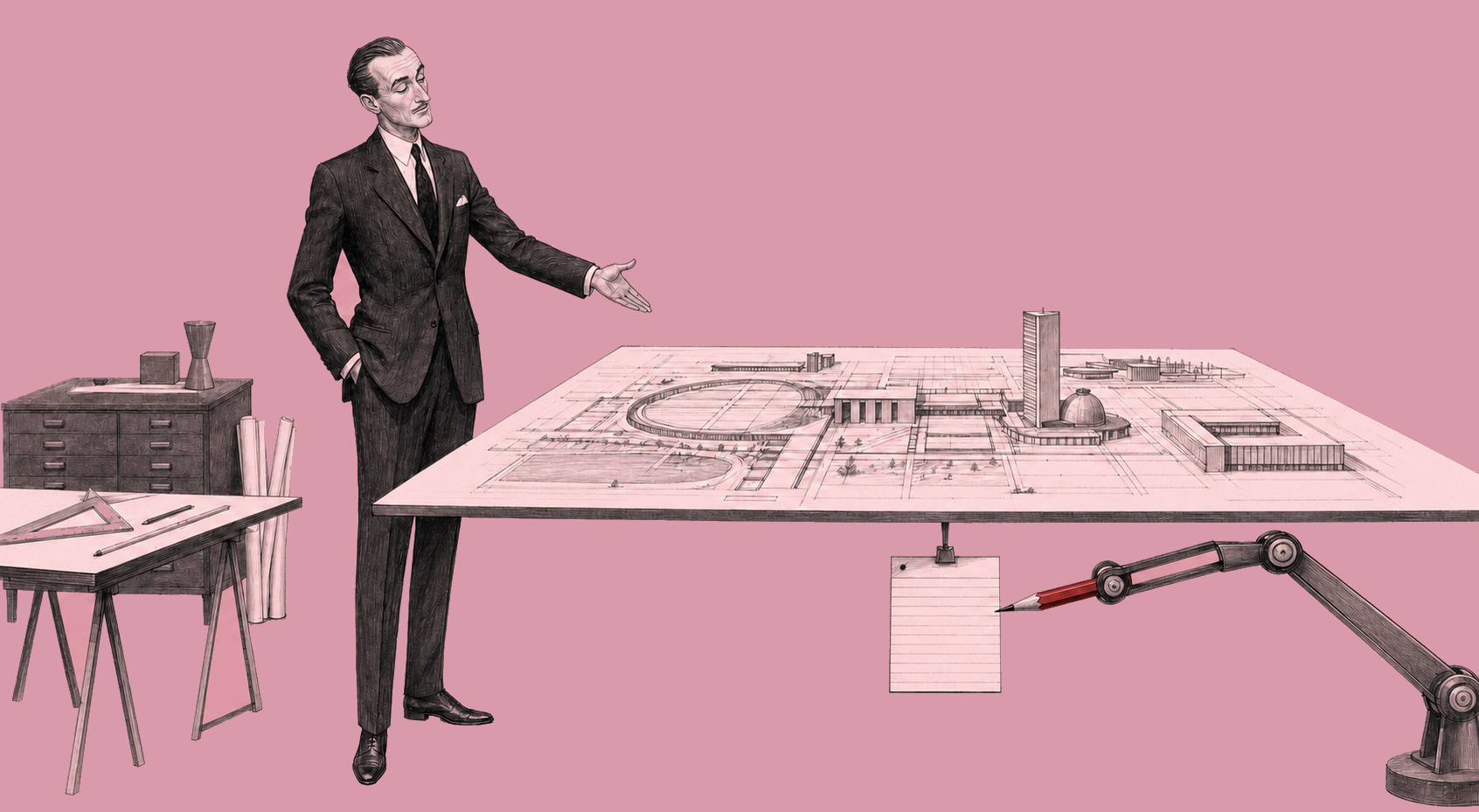
A strategy can be held upright by one sentence nobody has written down.
People will pay more for speed.
This customer will trust a machine with the first conversation.
The new model will behave roughly like the old one.
The plan sits above the sentence in a handsome binder. The sentence is underneath, doing most of the lifting.
That is an assumption. It is not a flaw. No plan can begin without some. The trouble starts when an assumption dresses as a fact and is allowed into the building without a badge.
The missing leg of the table
Colin Gray describes the durable logic of strategy as ends, ways, and means, with assumptions helping and hindering the whole arrangement. The first three get slides. Assumptions tend to get a faint footnote, if they are invited at all.
This makes ordinary strategy brittle. It makes AI-assisted strategy especially brittle.
A 2026 Google Research study tested language models across many newly generated strategic games. Models with similar average strength showed different capability profiles; some also varied sharply between strategically similar situations. These were games, not a forecast of your market. But the warning travels well: a model’s general reputation is not evidence that it will handle this particular choice gracefully.
The useful question is not, “Is the model good?”
It is, “What has to remain true for this decision to be good?”
BUREAU SYSTEM NOTE 16: The recommendation is confident. Its furniture has not been inspected.
Give each assumption a card
The CIA’s Key Assumptions Check has a modest purpose: make the premises behind a judgment explicit, then name what would require a rethink. It is a useful habit for a brand plan, a product decision, or an AI workflow. No trench coat is required.
Make one small assumption card for each premise that could change the choice:
- The sentence. State it plainly: “New customers will prefer a recommendation before speaking to a person.”
- The evidence. What supports it, and what is merely familiar office weather?
- The tripwire. What result, signal, or event would make the assumption unsafe?
- The keeper. Who will notice the tripwire and bring the card back to the table?
Do not make cards for everything. A stationery cupboard is not a strategy. Make them for the few premises that could turn a sensible direction into a very expensive corridor.
The NIST Generative AI Profile makes a parallel case in more formal shoes. It calls for intended purposes, context, impacts, assumptions, and limitations to be understood and documented, then revisited as the system and its setting change. That is not paperwork for its own sake. It is how a decision keeps contact with the world after the launch deck has gone home.
Let reality write in red pencil
An assumption card changes the role of AI.
Instead of asking a model to pronounce the answer, ask it to expose the premises: What would have to be true? Which customer might see this differently? What evidence would reverse the recommendation? What changed since the last review?
The model can produce a long, well-behaved list. A person still decides which uncertainty is worth living with.
This is the synthesis worth keeping: strategy needs explicit assumptions; AI makes hidden assumptions easier to multiply and harder to notice. So treat each consequential plan as a living wager, with its premises visible and its tripwires named.
The binder may remain handsome. It should not be load-bearing.
Continue with AI Strategy Is Not a Technology Roadmap and The Brief Is Not a Vending Machine.