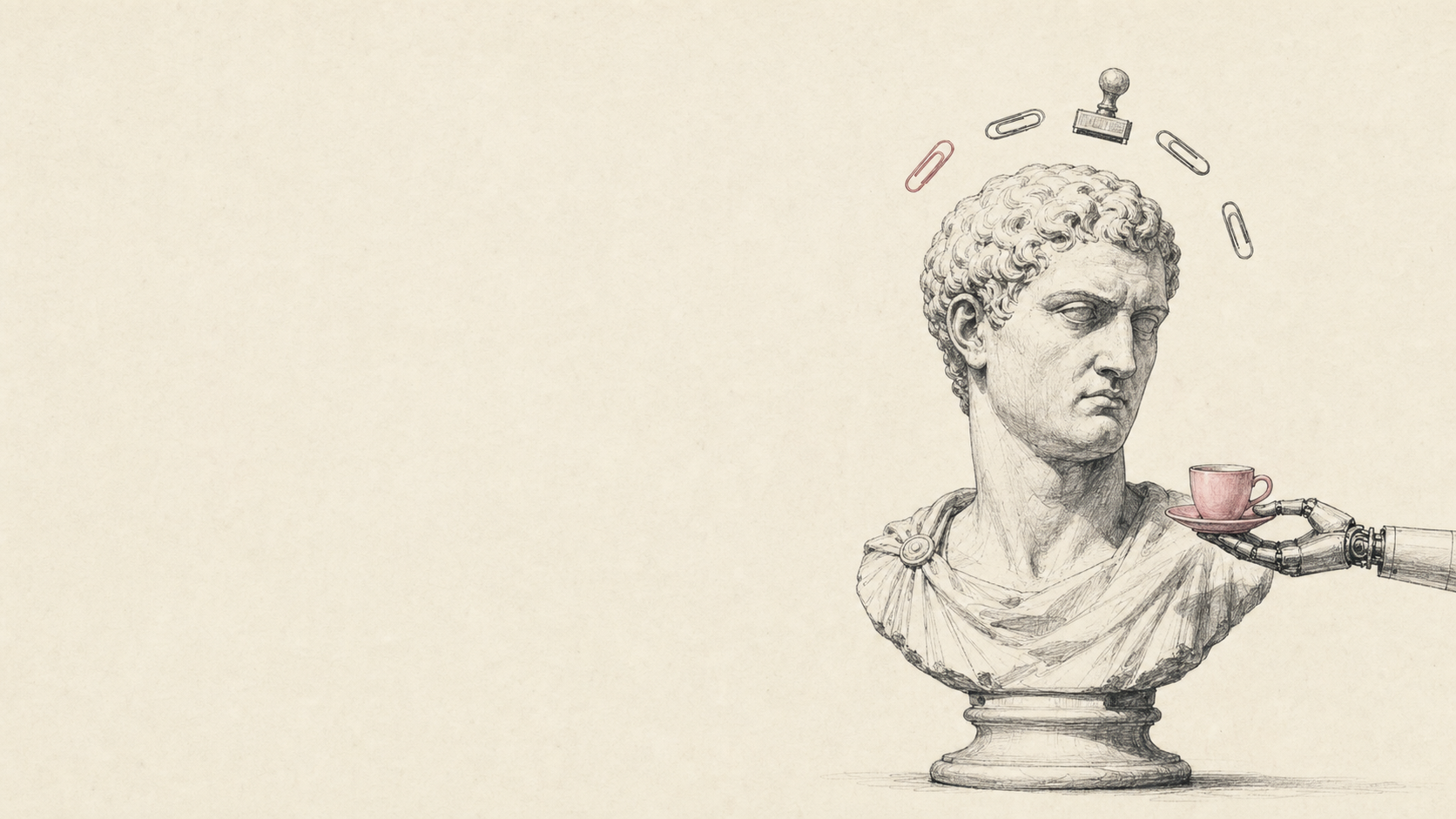
Power has a peculiar habit.
It arrives disguised as convenience.
A faster answer. A better recommendation. A machine that remembers every customer and never needs lunch.
Then, one quiet morning, the convenience begins making decisions.
Robert Wright’s new book, The God Test, asks whether humanity is morally prepared for the power of artificial intelligence. His answer is not mainly technical. In Wright’s own explanation, passing the test requires something more difficult than a better machine: less tribal thinking, more cooperation, and a clearer sense of responsibility.
The argument is cosmic. A smaller copy belongs in every brand department.
Every brand gets a smaller test
A brand is often described as a promise.
But promises are easy before power arrives.
The interesting moment comes later, when a company can predict a person’s weakness, personalize the price, imitate a trusted voice, remove a human from the conversation, or produce ten thousand persuasive messages before breakfast.
Once the machine can do the thing, three less dazzling questions arrive:
- What should this brand use it for?
- What should this brand refuse to do?
- What happens to the person on the other side?
These questions are brand strategy because they shape memory and trust. They decide whether the organization feels helpful, slippery, careful, or faintly predatory.
The logo will be informed later.
A constitution, not a halo
Skip the announcement that the AI is ethical, human-centred, responsible, and sprinkled with parsley. Publish visible rules and make the product obey them.
For example:
- We tell people when they are dealing with a machine.
- We do not use intimate data merely because it is available.
- A person can question an automated decision.
- Personalization may reduce effort. It may not reduce freedom.
- The machine can recommend. It cannot quietly corner.
These belong in the product, not in the ornamental shrubbery of the values page.
This matters because trust around AI is already fragile. In Kantar’s study of more than 10,000 people across ten countries, concerns centred on job loss, misuse of personal data, and loss of control. People may enjoy the convenience while distrusting the system that provides it.
Both feelings can fit in the same coat.
BUREAU SYSTEM NOTE 09: The experience has been personalized. Consent was inferred from continued breathing.
The memory power leaves behind
Most people will not inspect a company’s model, safety framework, or governance diagram.
They will remember how the system treated them.
Did it explain itself? Did it leave room for judgment? Did it help without becoming possessive? Did the company accept responsibility when the machine was wrong?
As AI systems begin to influence what people discover and choose, existing trust and preference may matter even more. Kantar argues that brand strength will shape which options AI systems present.
Familiarity helps, but it cannot carry unfamiliar power by itself. The test remains.
Wright asks whether humanity can become wise enough for what it is building. The smaller version belongs to every organization adopting AI:
Can the brand become worthy of what it can now do?
More power has arrived.
The name on the door remains responsible.